Appearance
How does the 1 in X games thing work?
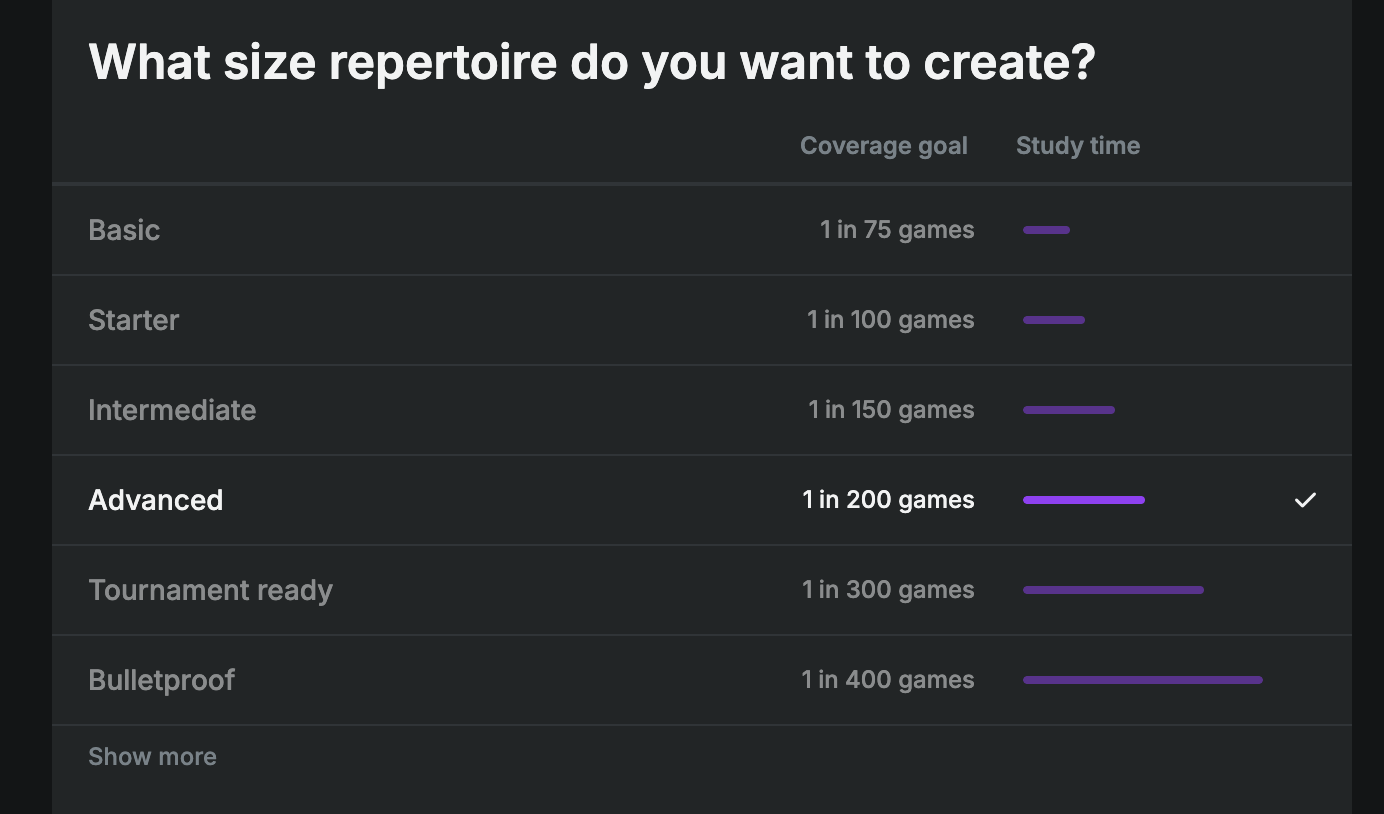
This is the "heart" of Chessbook, but it's somewhat complicated to explain.
Explanation by example
Let's say you have a very simple repertoire for White, consisting of just 1.e4 e5 2.Nf3 Nc6. With that repertoire, what are the odds of reaching this position?
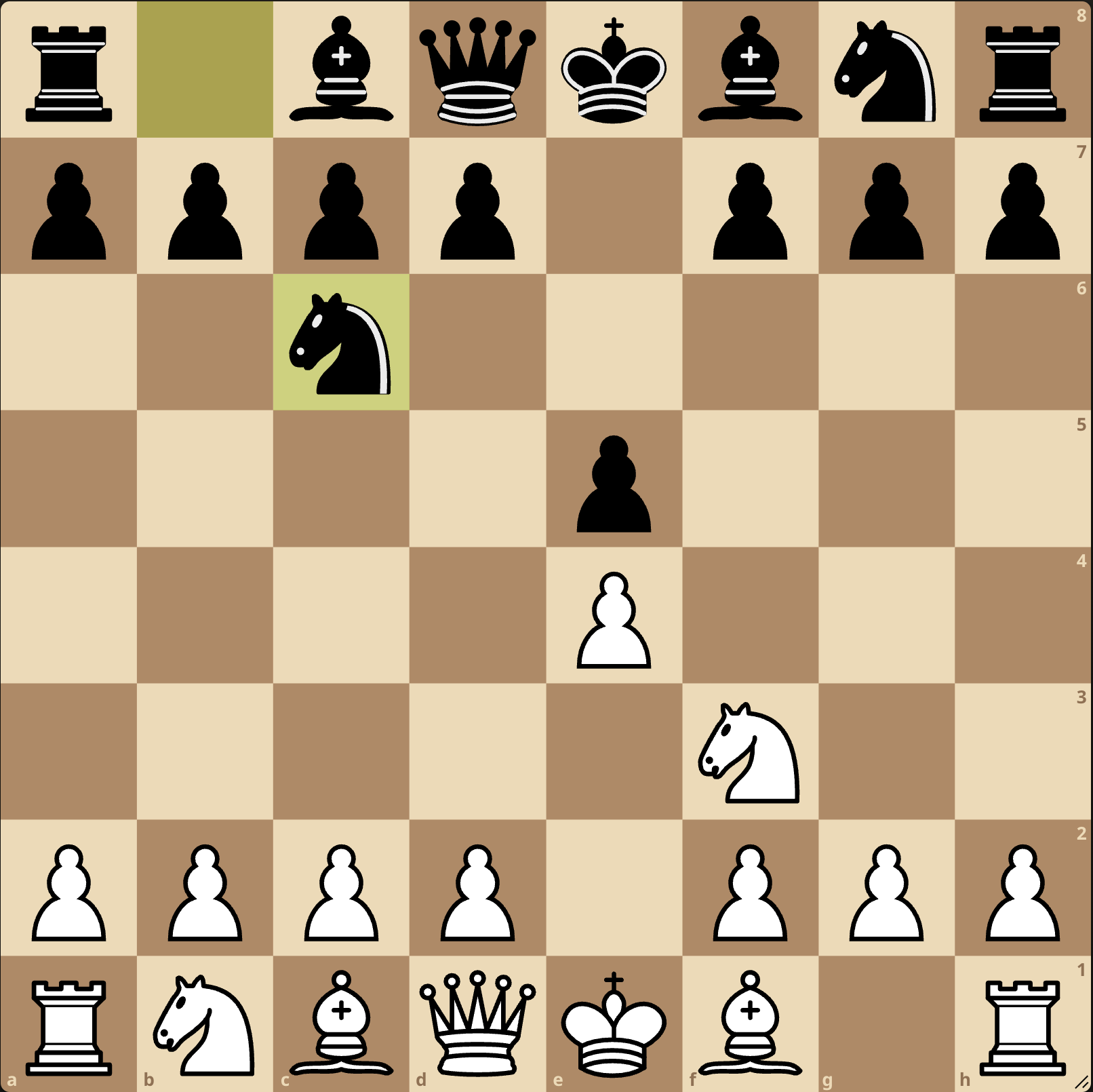
You may go into the opening database in Lichess and say "Well there are X games in total, but only Y games in this position, so Y/X". But you're not taking into account that your side's moves are guaranteed, because you always play 1.e4 and 2.Nf3.
So what you need to know is the probability of your opponent playing 1... e5, then the probability of your opponent playing 2... Nc6 after that. Let's say they're 50% and 50%. You multiply those together, and get a chance of 25%. This means that you will see this position in 1 in 4 games. If you played 100 games, you'd expect to see it about 25 times.
Now that you understand the 1 in X idea, the rest is easier to understand. In the example above, your repertoire ends on a position that happens in a quarter of your games. Surely you should go deeper than that, but how deep?
We argue you should keep building your repertoire until you've arrived at positions that are too rare to be worth memorizing. That exact figure varies, and you can set it to whatever you want, but for the sake of example, let's say you choose 1 in 200. That means you're saying "I am going to build a repertoire that has a response to every position that's expected to occur at least once in every 200 games I play".